When people think about getting back to fitness after having a baby, they usually think about walks, gym sessions, or some kind of structured programme. What most new mums are never told is that the most important thing you can do for your postnatal body (in the very first days, long before you lace up your trainers) is learn to breathe properly again.
That might sound overly simple. But diaphragmatic breathing, and specifically the kind that connects your breath to your pelvic floor, is the foundation that every other movement is built on. It is where postnatal rehabilitation genuinely begins.
This post is general information only and is not a substitute for professional medical advice. Before starting or changing any exercise routine after birth, please check in with your LMC, midwife, GP, or a women's-health physiotherapist. Every birth and every recovery is different, and your care team is the right first call.
Why breathing is the foundation, not just a warm-up
During pregnancy, your entire core system adapts to make room for a growing baby. Your diaphragm is pushed upward, your abdominal muscles stretch and sometimes separate, and your pelvic floor takes on increasing load for nine months. By the time you give birth, the whole system (diaphragm, deep abdominals, pelvic floor, and spinal stabilisers) has been pulled out of its normal working relationship with itself.
Before you can ask any of those structures to do meaningful work again, you need to help them reconnect. And the simplest, most accessible way to do that is through breath.
Diaphragmatic breathing (breathing that uses the full capacity of the diaphragm rather than the shallow chest breathing many of us default to) creates a gentle, rhythmic pressure change inside the body. This pressure change is what your pelvic floor responds to, and it is the mechanism through which breath and core are intimately linked. Practise it well, and you are laying down the neuromuscular foundations for everything else that comes later: strength training, lifting your baby, eventually running.
The diaphragm and pelvic floor are a team
Your diaphragm sits at the top of your core canister (the dome-shaped muscle that is your primary breathing muscle) and your pelvic floor sits at the bottom. They work together constantly, whether or not you are aware of it.
On a full inhale, the diaphragm descends, pressure inside the abdominal cavity increases, and the pelvic floor responds by softening and lowering slightly to accommodate it. On the exhale, the diaphragm ascends, pressure reduces, and the pelvic floor gently recoils upward. This subtle, coordinated movement happens with every single breath you take, thousands of times a day.
After birth, this coordination can be disrupted. Pain, guarding around a c-section wound or perineal tear, holding tension in the belly, or simply the shock of what the body has been through can all interrupt this natural rhythm. Breathing exercises help to restore it: gently, without force, and without any equipment.
How to practise 360-degree breathing
360-degree breathing, sometimes called three-dimensional or cylindrical breathing, is simply the practice of allowing the breath to expand your ribcage in all directions (front, sides, and back) rather than just lifting the chest or puffing out the belly.
Here is a simple way to begin:
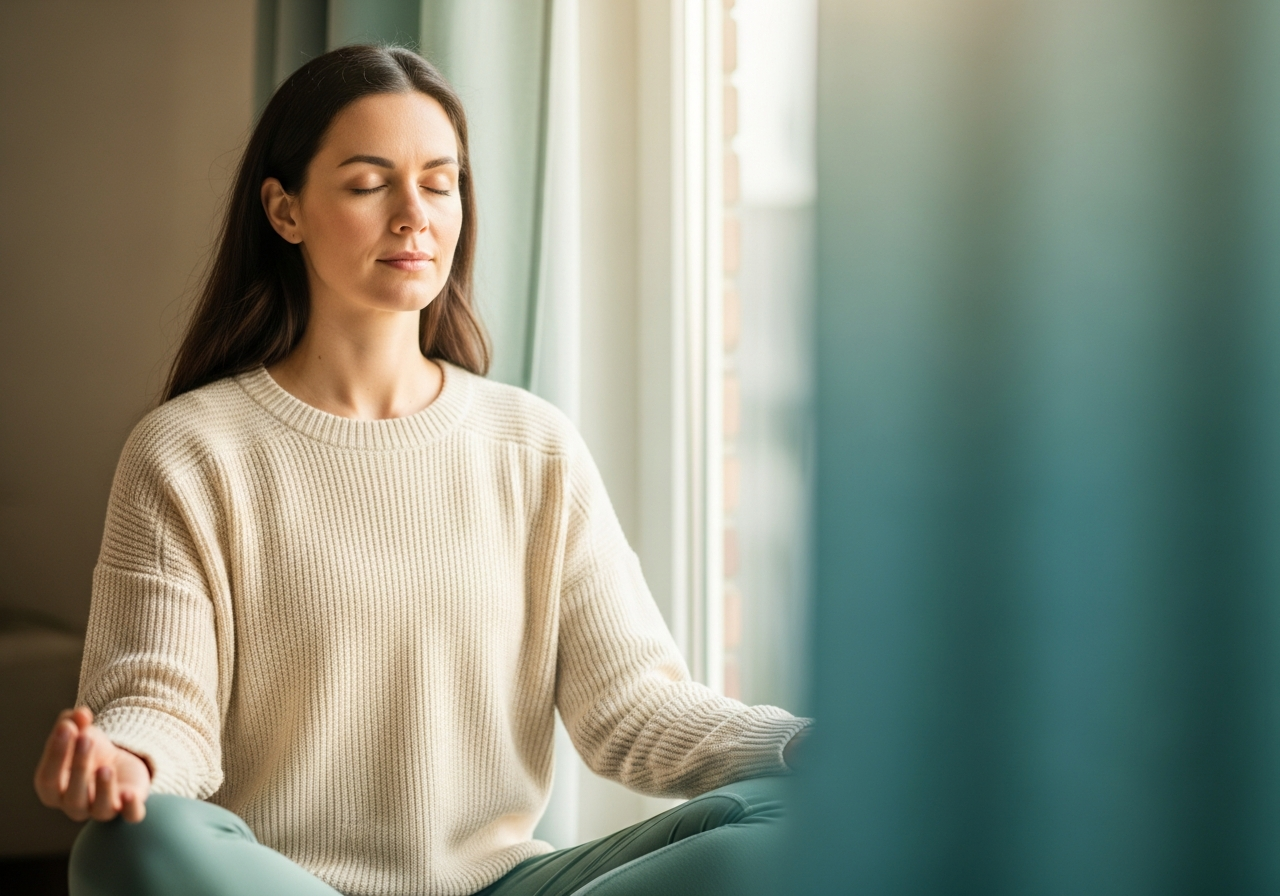
- Find a comfortable position: lying on your back with knees bent is often easiest in the early postnatal period. You can also sit supported in a chair.
- Place one hand on your lower ribs at the side of your body. This is where you want to feel movement.
- Take a slow, easy inhale through your nose. Let it last around four counts. As you breathe in, allow your ribs to expand outward under your hand: sideways and slightly backward, not just forward.
- Let your belly soften and rise gently. Do not force it or push it out deliberately.
- Exhale slowly through your mouth or nose for around six counts, letting everything naturally release. Notice the ribs drawing back in and the belly softening.
- Repeat five to ten times, without any strain or effort.
If this feels uncomfortable, reduces in any way, or causes dizziness, stop and rest. This should feel calm and restorative, not challenging.
Connecting your breath to your pelvic floor
Once the 360 breathing pattern starts to feel natural, you can begin to gently tune in to what your pelvic floor is doing with each breath cycle. This is not about contracting or clenching: it is about awareness first.
As you inhale, see whether you can feel the pelvic floor release and soften downward. As you exhale, notice whether it gently lifts and recoils. For some mums this is immediately perceptible; for others it takes a few sessions to develop the body awareness. Both are normal.
This breath-and-lift pattern is the starting point for pelvic floor recovery. It is also one of the safest ways to begin reconnecting with this area without any risk of creating pressure or strain. Many women's-health physiotherapists teach exactly this as the very first step in postnatal rehabilitation, often alongside gentle walking.
Signs to watch for
- Tension or pain in the pelvic floor during or after breathing practice: ease back and mention it to your LMC or physio.
- A feeling that the pelvic floor is not responding at all: this is common and often improves with consistent, gentle practice, but a pelvic health physiotherapist can assess this properly.
- Feeling like you can only contract and not relax: equally important and worth discussing with a professional.
When can you start?
Gentle diaphragmatic breath awareness is generally considered appropriate to begin in the first few days after birth, including after a c-section. It places no load on your wound or perineum and asks nothing more of the body than its most natural function.
That said, the postnatal period is one of enormous change, and pain, medication, and exhaustion can all affect how any exercise feels. If breathing deeply causes pain, particularly around a c-section wound or sore ribs, ease off the depth and check with your midwife.
The more structured breathing-plus-pelvic-floor work is best explored once you are a few weeks out from birth and feeling ready, and ideally in conversation with your care team or alongside a postnatal fitness approach that has been designed with your recovery in mind.
Breathing as a postnatal wellbeing tool
There is another dimension to postnatal breathing practice that does not get talked about enough: its effect on your nervous system.
Slow, diaphragmatic breathing activates the parasympathetic nervous system (what is often called the rest-and-digest response). This is the counterbalance to the fight-or-flight activation that new parenthood can trigger: the broken sleep, the constant vigilance, the emotional weight of caring for a newborn. Even five minutes of intentional breathing can measurably reduce cortisol and heart rate.
You can do it during a night feed. In the car before an appointment. Lying on the floor while your baby has tummy time. It costs nothing and requires nothing except a few minutes and a quiet intention. For mums who are not yet ready for any other form of movement, breathing practice is genuinely enough, and it is genuinely doing something.
Common questions
When can I start breathing exercises after birth?
Gentle diaphragmatic breathing is generally one of the safest things to begin in the first days after birth, whether you had a vaginal birth or a c-section. There is no standard waiting period for gentle breath awareness: it is restorative rather than strenuous. That said, if you had any complications or feel discomfort with deep breaths, check with your LMC or midwife first. For more structured breathing and pelvic-floor connection work, your six-week check is a natural milestone to revisit your plan with your care team.
What is 360-degree breathing?
360-degree breathing, sometimes called three-dimensional or cylindrical breathing, refers to inhaling in a way that allows the ribcage and belly to expand in all directions (front, sides, and back) rather than just lifting the chest or puffing out the front of the belly. It encourages the diaphragm to descend fully on the inhale, which gently increases intra-abdominal pressure and prompts the pelvic floor to move naturally with the breath cycle.
Does breathing actually help the pelvic floor?
Yes. Your diaphragm and pelvic floor are biomechanically linked. When you inhale, the diaphragm descends and the pelvic floor naturally softens and lowers slightly. When you exhale, the diaphragm rises and the pelvic floor gently recoils upward. Practising conscious 360 breathing helps you rebuild awareness of this connection, which is the foundation of good core and pelvic-floor function. It is one of the reasons breathing is taught before anything else in postnatal rehabilitation.
Can breathing exercises help with postnatal anxiety or stress?
They can. Slow, diaphragmatic breathing activates the parasympathetic nervous system (often described as the rest-and-digest response) which can reduce feelings of anxiety, lower heart rate, and ease physical tension. For new mums running on disrupted sleep and high vigilance, even five minutes of intentional breathing can be genuinely calming. It is a tool you can use any time, anywhere, including during a night feed.
Ready to move at your own pace, starting with exactly where your body is? Join the Easy Peasy early access list and be the first to know when we launch.