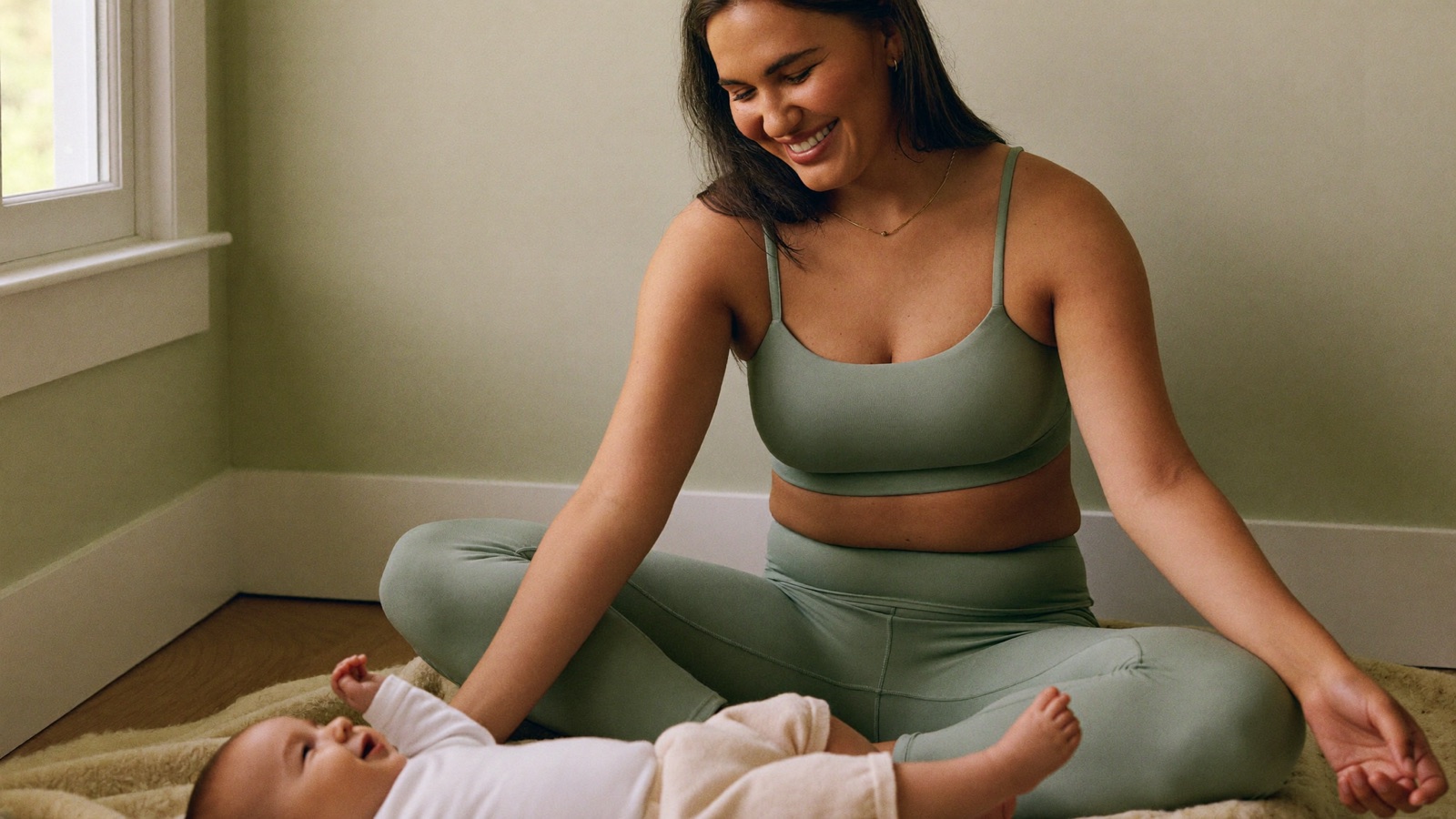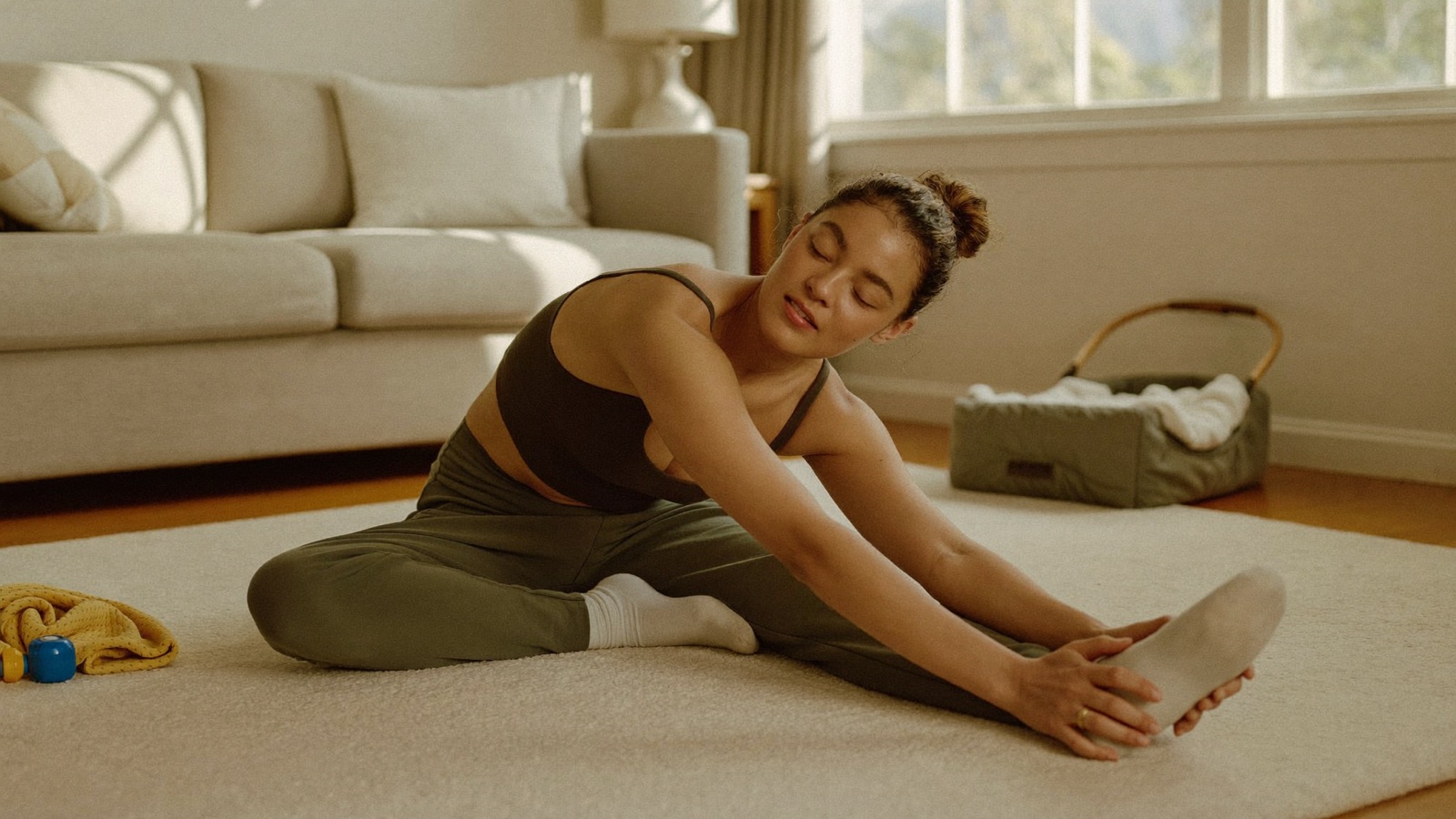
Somewhere along the way, the conversation about getting fit after having a baby got hijacked. It became about shrinking. About bouncing back. About a body that looks like it was never pregnant in the first place. And if you have spent any time on social media in the weeks after giving birth, you will know exactly how relentless that messaging can be.
Easy Peasy exists to offer something different. This is a postnatal fitness approach built entirely around how your body feels, heals, and functions, not what it looks like or weighs. That is not just a values statement. It is grounded in what actually supports good postnatal health.
This post is general information only and is not a substitute for professional medical advice. Before starting or changing any exercise routine after birth, please check in with your LMC, midwife, GP, or a women's-health physiotherapist. Every birth and every body is different, and your care team is the right first call.
The bounce-back myth, and why it is harmful
The "bounce-back" narrative (that a good recovery looks like rapidly returning to your pre-pregnancy body) is not just unrealistic. It can actively work against your health.
Your body in the postnatal period has specific nutritional needs, especially if you are breastfeeding. Restricting food to lose weight while also healing from birth and producing milk puts enormous strain on a system that is already working incredibly hard. Sleep deprivation compounds this further by affecting hunger hormones, making it harder to regulate appetite and energy in any deliberate way.
Rushing back to high-intensity exercise to change your body's appearance can also mean skipping the foundational rehabilitation that protects your long-term health. Pelvic floor issues, abdominal separation, and joint instability (all common after birth) can be made significantly worse by exercise that is too intense too soon. The irony is that chasing the bounce-back can leave you less physically capable in the long run, not more.
None of this means you cannot or should not exercise postnatal. It means the goal matters. When the goal is getting stronger and feeling better rather than looking a certain way, the approach changes entirely, and so does the outcome.
What body-neutral postnatal fitness actually looks like
Body-neutral postnatal fitness is not code for doing nothing. It is an approach that measures progress differently. Instead of tracking your weight or how your jeans fit, you track things like:
- Can I walk further than I could last week without pelvic heaviness or leaking?
- Does lifting and carrying my baby cause less back pain than it did?
- Am I sleeping better when the opportunity arises?
- Do I feel more energised in the hour after I exercise?
- Can I get up from the floor more easily than I could a month ago?
- Am I enjoying movement, or does it feel like punishment?
These are all real, meaningful markers of fitness and recovery. They reflect strength, resilience, and function. They also happen to correlate very strongly with long-term health outcomes, far more so than a number on a scale.
Body-neutral fitness is also about choosing movement types that serve your body rather than punish it. In the early months, this might mean breathing exercises, gentle walking, and pelvic-floor reconnection. Later, it might mean building strength through low-impact movement that leaves you feeling better than when you started. The shape of your body is not part of the equation.
The mental load of postnatal body image
It is worth naming something that often goes unsaid: the pressure to "get your body back" after having a baby is not just a physical burden. It is a mental one.
New parenthood is already exhausting, emotionally complex, and isolating. Adding the project of reshaping your body on top of that (particularly when you are sleep-deprived and still physically healing) creates a kind of chronic low-grade guilt that follows you everywhere. You feel bad when you rest. You feel guilty when you eat something comforting. You compare your body to photos of celebrities six weeks postnatal and wonder what is wrong with you.
Nothing is wrong with you. Your body grew and birthed a human being. The timeline for what comes after that is yours to set, not anyone else's.
At Easy Peasy, the tracks inside the app are designed to take that weight off. There are no weight-loss challenges, no calorie counters, no before-and-after frameworks. Just movement that meets you where you are, progresses at a pace your body can sustain, and builds something that lasts.
Getting strong after baby: what it really means
Strength after birth is a genuinely useful goal, and one that is often underestimated. Having a baby is physically demanding in ways people do not always anticipate. Picking your baby up from a bassinet hundreds of times a day. Carrying a car seat. Feeding in positions that leave your neck and shoulders aching. Getting up and down from the floor. Pushing a buggy up a hill.
Building functional strength (the kind that makes those daily demands feel easier) is a concrete, achievable, and genuinely meaningful fitness goal for a new mum. It does not require a gym. It does not require an hour. It requires consistent, progressive, postnatal-safe movement that starts gently and builds over time.
This is what our practitioners had in mind when designing the Easy Peasy programme. You can read more about the fourth trimester and what is actually happening in your body in those first three months: understanding it tends to make this approach make a lot more sense.
What about nutrition and breastfeeding?
Nutrition is deeply intertwined with postnatal recovery, and it is outside the scope of what we can cover in depth here. But one thing is worth saying clearly: if you are breastfeeding, your caloric needs are significantly higher than they were before pregnancy. Restricting food to lose weight while breastfeeding is not recommended without guidance from a healthcare provider, as it can affect both your milk supply and your own recovery.
If you have specific questions about postnatal nutrition, a registered dietitian or your LMC can provide personalised guidance. What we would encourage in the meantime is eating enough to fuel the demands you are placing on your body, and not placing guilt around food at a time when nourishment is one of your most important tools for healing.
Common questions
Should I focus on weight loss after having a baby?
That is entirely your choice, and we are not here to tell you what to do with your body. What we would gently offer is this: the postnatal period is already physically demanding, and your body has just done something remarkable. Prioritising weight loss in the early months can distract from the more important work of rebuilding strength, healing tissue, and resting enough to care for your baby and yourself. Many mums find that when they focus on how their body feels (stronger, more energised, less uncomfortable) other things tend to follow in their own time.
What milestones should I aim for instead of the scale?
Meaningful postnatal milestones include: being able to walk for twenty minutes without pelvic heaviness or leaking, lifting and carrying your baby without back pain, noticing improved energy and mood after gentle movement, getting up off the floor more easily, and being able to return to activities you enjoy without discomfort. These are real markers of recovery and fitness. None of them require a scale.
I feel guilty for not exercising more. Is that normal?
Very much so, and very understandable. We are surrounded by images of bounce-back bodies and timelines that are completely disconnected from what postnatal recovery actually looks like. Guilt is often a signal that your expectations were set by external pressure rather than your own body's needs. You do not owe anyone a particular shape or speed of recovery. Showing up for gentle movement when you can, and resting when you need to, is genuinely enough.
How does the Easy Peasy app approach fitness differently?
Easy Peasy does not use weight, calories, or appearance-based goals at all. Every track is designed around how your body functions (building strength progressively, improving pelvic-floor health, reducing common postnatal discomforts) and reviewed by NZ-registered women's-health practitioners. Progress is measured in how you feel, your energy levels, and what you can do, not in kilograms.
Ready to move in a way that actually serves you? Join the Easy Peasy early access list and be part of a different kind of postnatal fitness from day one.